Hospital-Grade Suction: Does It Really Matter When Choosing a Breast Pump?
If you've spent any time comparing breast pumps, you've probably come across the phrase "hospital-grade suction." Here's what it actually means, and whether it should influence your decision.
Some brands use it as a selling point, while others don’t mention it at all. So should it influence your decision?
The short answer is yes—but probably not for the reasons you think.
First, let’s clear up a common misunderstanding
People often assume that a pump with hospital-grade suction is the same as a hospital breast pump. They’re actually two different things.
A true hospital breast pump is a large, medical-grade machine designed for multiple users in hospitals or maternity wards. These pumps are built to run for long periods and are often recommended for mothers who have premature babies, are establishing their milk supply, or need extra support in the early weeks after birth.
Most wearable and portable pumps aren’t hospital pumps.
What many modern pumps offer instead is hospital-grade suction power—meaning they can generate a level of suction similar to professional hospital equipment, while remaining compact enough to wear under your bra or slip into a handbag.
It’s an important difference.
Why suction matters
Breast pumps don’t create milk—they simply help remove it.
The more effectively milk is removed from the breast, the better the body understands that more milk is needed. That’s why suction plays such an important role.
A pump with stronger, well-controlled suction can often:
- Empty the breast more effectively
- Stimulate let-down more efficiently
- Reduce the amount of time spent pumping
- Help maintain milk supply when pumping regularly
Of course, stronger doesn’t always mean better. Comfort matters just as much. The best pump is one that removes milk efficiently without causing pain.
When hospital-grade suction can make a real difference
Not every mum needs the strongest pump on the market.
If you’re breastfeeding most of the time and only expressing occasionally, a standard wearable pump may be all you need.
Hospital-grade suction becomes more valuable when pumping is a regular part of your routine.
For example, if you:
- Are returning to work
- Pump several times a day
- Exclusively express milk
- Are trying to build or maintain your milk supply
- Often feel your breasts aren’t empty after pumping
…then having access to stronger suction can make your pumping sessions more effective.
Many mums also find that a pump which empties the breast well means fewer repeat sessions during the day.
It’s not about using the highest setting
One of the biggest misconceptions is that hospital-grade suction means pumping at maximum power.
In reality, very few mothers use the highest setting.
A good breast pump gives you room to adjust the suction until you find the level that’s both comfortable and effective. Some days you may need a little more stimulation, while on others a lower setting is all that’s needed.
The goal isn’t to pump harder—it’s to pump smarter.
So, is hospital-grade suction worth paying for?
That depends on how you’ll use your pump.
If you’ll only express milk occasionally, you may never notice the difference.
But if your pump is going to become part of your daily routine, stronger suction can save time, improve milk removal, and make pumping feel less like a chore.
It’s one of those features that many parents don’t fully appreciate until they’re several weeks into their breastfeeding journey.
Where the Mumelle WarmFlow Wearable Breast Pump P5 fits in
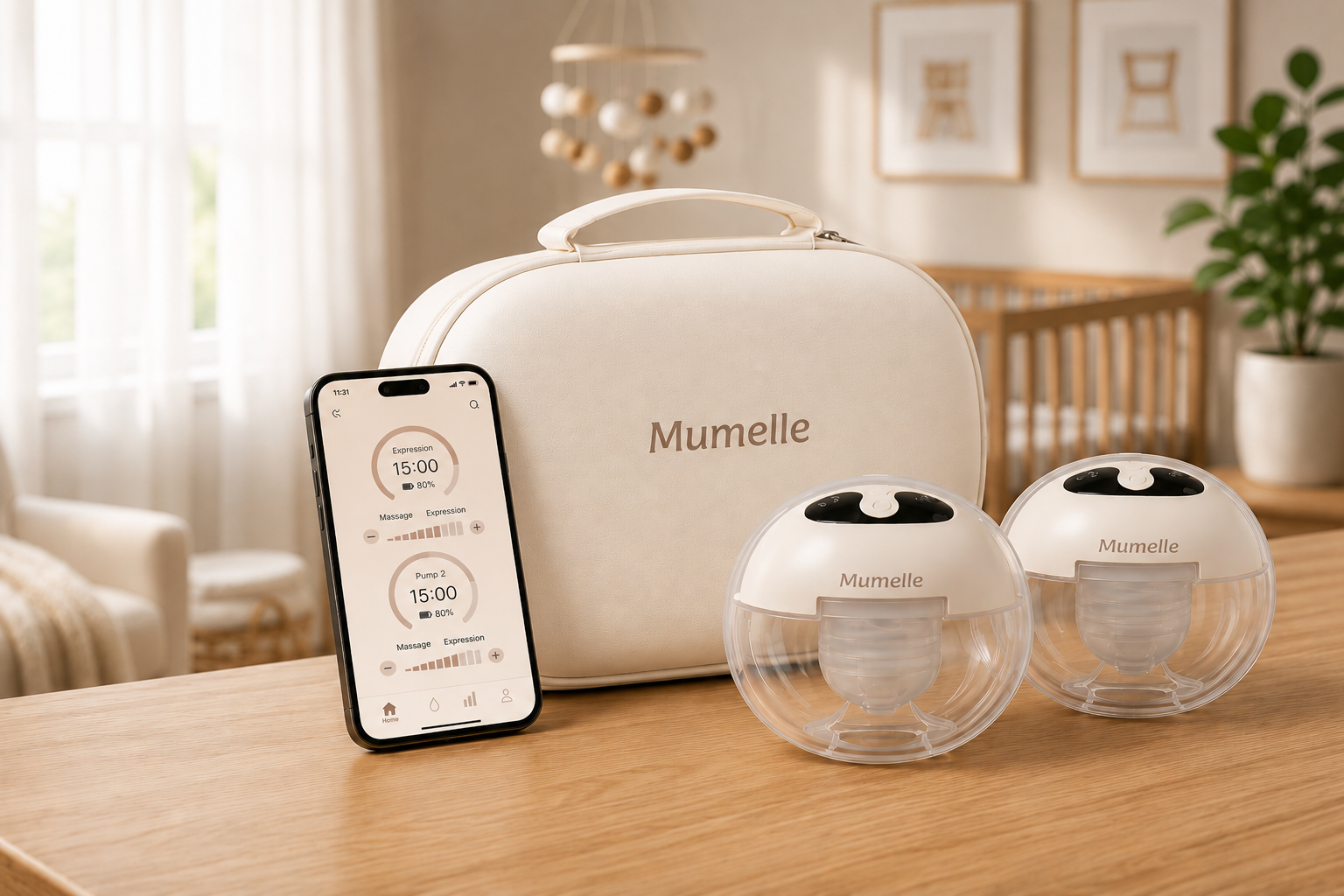
The Mumelle WarmFlow Wearable Breast Pump P5 is a personal, wearable breast pump designed with hospital-grade suction power to help mothers express milk efficiently without sacrificing comfort.
Because it offers adjustable suction levels, you’re not locked into using maximum power. Instead, you can find the setting that works best for your body while still benefiting from the stronger suction capability when you need it.
Combined with its warming technology and hands-free design, it’s built for mums who want the flexibility to pump at home, at work, or while getting on with everyday life.
The bottom line
When comparing breast pumps, don’t get too caught up in marketing terms.
Instead, ask yourself a few practical questions:
- Will I be pumping every day?
- Will I be returning to work?
- Do I want shorter, more efficient pumping sessions?
If the answer is yes, choosing a pump with hospital-grade suction power is well worth considering.
After all, expressing milk is already a commitment. Having a pump that’s designed to do the job efficiently can make that journey just a little bit easier.